
How to Audit Wardrobe Gaps Before a Seasonal Clothing Order
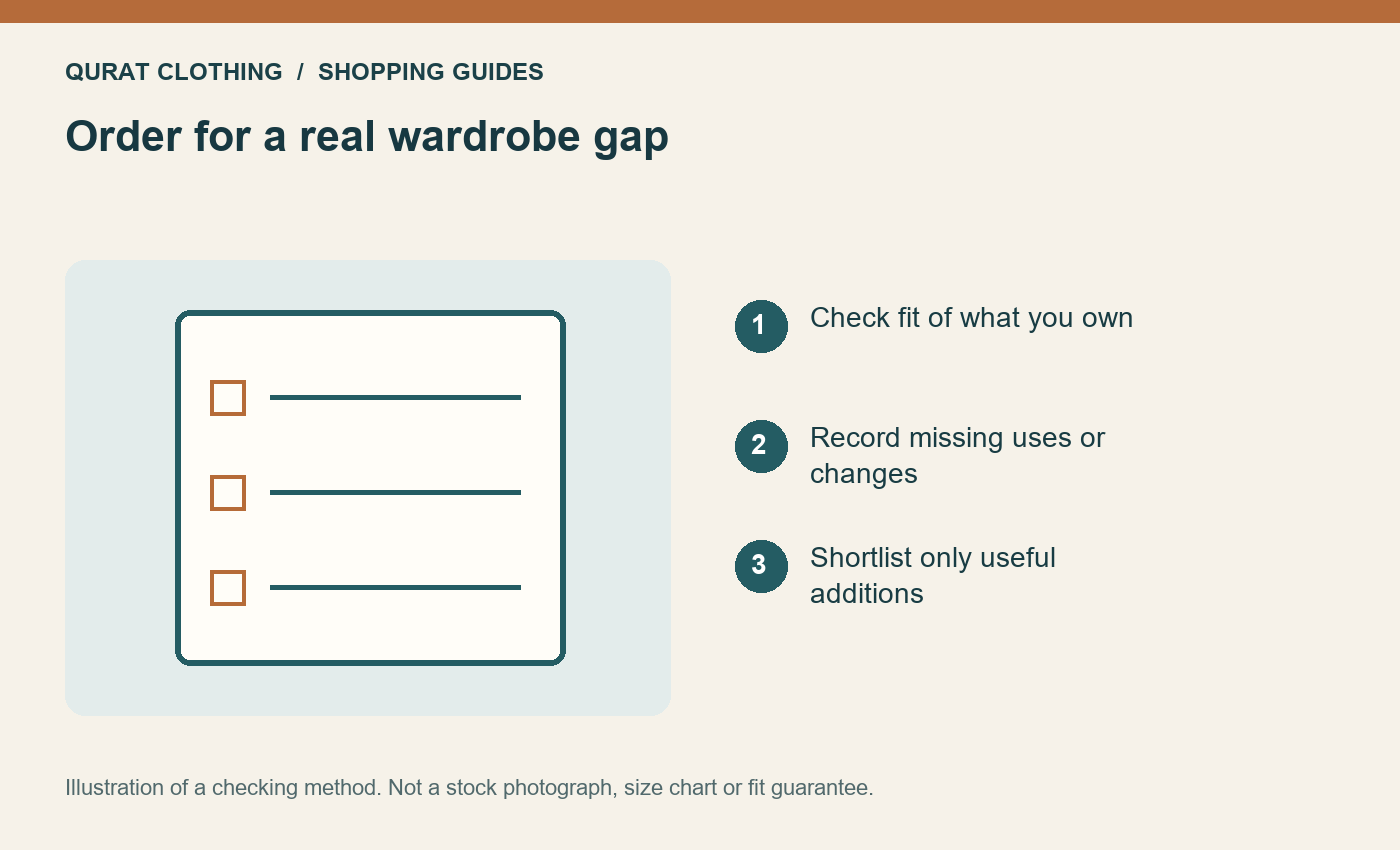
Before a seasonal clothing order, check what still fits, what is actually used and which clothing situations remain uncovered. Write a gap list before browsing. A useful order fills those gaps rather than adding more pieces that repeat an outfit you already avoid wearing.
A wardrobe audit does not require a fixed capsule size or a prescribed number of garments for every family. Laundry access, daily routines, available storage and the needs of each wearer make those decisions different.
Sort by the next season's real routines
List the activities you expect: everyday home use, school changes, work, family outings or planned travel. Check which current garments suit those situations. Record fit concerns and missing layers separately from colour or style preferences.
Inspect garments in their actual condition. An item that exists in a drawer but no longer fits is different from a wearable item you simply forgot about. Likewise, clothing awaiting a possible repair should not automatically be counted as ready for the coming week.
A four-part wardrobe check
| Group | Question | Next action |
|---|---|---|
| Ready to use | Does it fit and work for a current routine? | Count it before buying a duplicate. |
| Needs a decision | Is care, repair or fit still unresolved? | Resolve the issue before counting it as usable. |
| Missing use | Which actual situation lacks suitable clothing? | Describe the requirement and measurements. |
| Optional preference | Is this a wanted addition rather than a gap? | Keep it separate from the essential shortlist. |
Example: preparing for a cooler school commute
Suppose a child has enough everyday tops, but the usual outer layer no longer fits over them. The immediate gap is a suitable layer with the right dimensions, not another collection of tops. Compare the reference outfit and the proposed layer before deciding on a size.
A separate child in the household may need trousers rather than the same layer. Keep each person's gap list independent. The family wardrobe guide discusses the broader purchase sequence, while the school commute guide covers that specific use.
Write a short buying brief
For each gap, record the wearer, intended activity, reference dimensions, essential construction, flexible preferences and your own spending limit. Include care requirements you can realistically manage. Keep any proposed QC codes alongside this brief so a sold-out item can be compared with a suitable alternative rather than replaced blindly.
Use the measurement method when updating reference dimensions. A garment's old label size is not enough evidence that the next item will work in the same way.
Check the shortlist against the gap list
- Does each proposed item address a named use?
- Will it work with garments already available?
- Are the relevant fit and care details confirmed?
- Does the basket include unwanted duplicates?
- Have delivery charges and current terms been checked?
Explore current clothing through the family shortlist guide and the appropriate department. Limited export-surplus stock can change, so confirm the actual selected items before payment. A smaller useful order can serve a wardrobe better than a larger order whose pieces do not fit the gaps.
Comments
Be the first to comment.