
Clothing Fabric Types: A Practical Qurat Clothing Guide
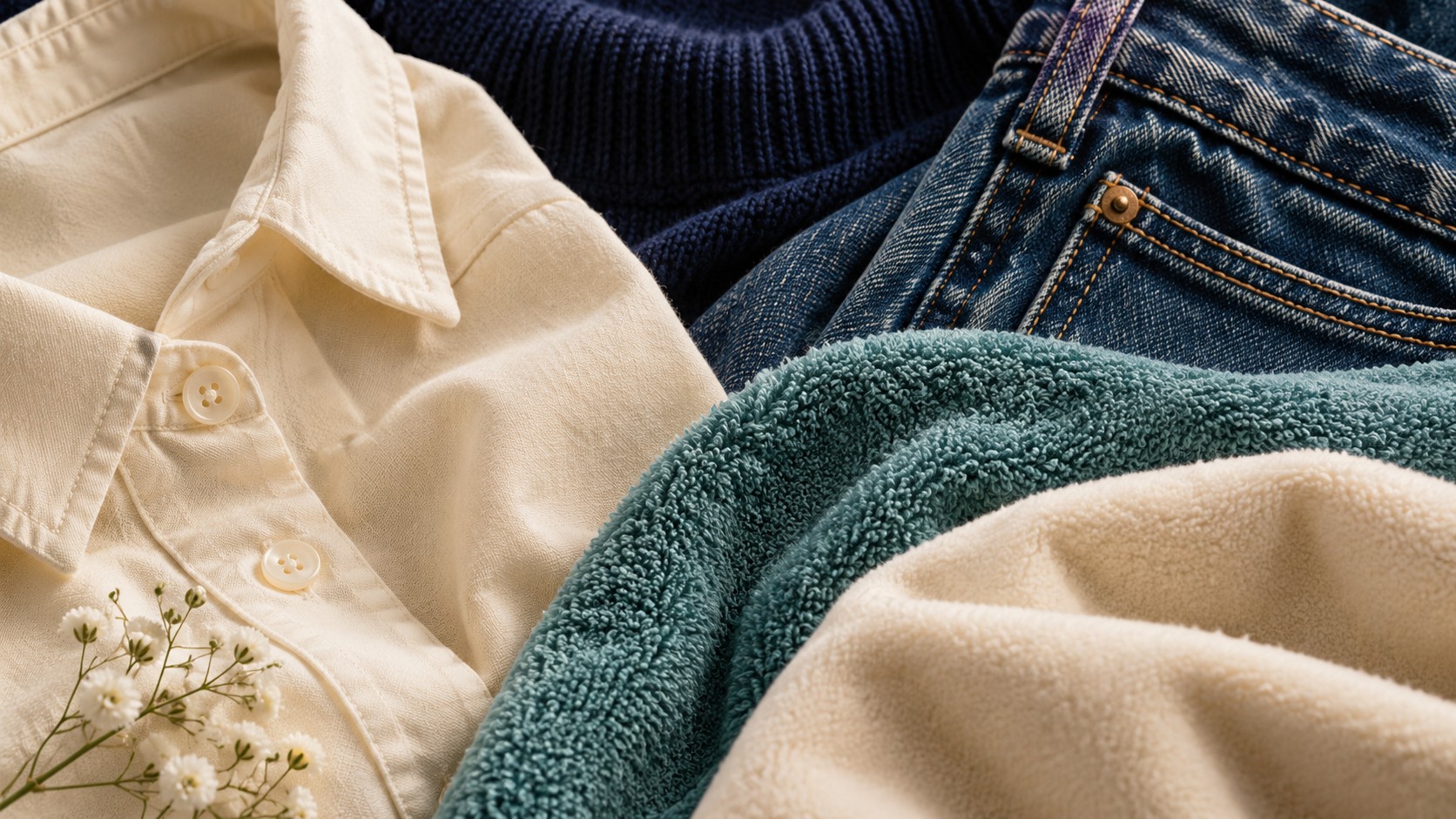
A practical guide from Qurat Clothing
Choosing clothing fabric begins with the actual item rather than a universal “best fabric” rule. Read the composition, inspect the construction and consider the intended fit and care routine. Qurat Clothing’s guide explains how to keep those questions separate.
Composition and construction describe different things
Composition identifies the fibres stated for a garment. Construction describes how the textile is made or finished. Words such as denim, jersey, terry and fleece should not be treated as complete fibre-composition statements.
For example, a soft brushed surface does not tell you the exact cotton or polyester percentage. Use a readable label or reliable product specification. If the information is missing, ask rather than infer it from a photograph.
Compare fleece and terry item by item
Look at the inside as well as the outer surface. A brushed fleece appearance and a looped terry appearance can help describe what is visible, but neither establishes a temperature rating or a universal care method.
Check thickness, coverage, openings and room for intended layers. Our fleece-versus-terry guide explains this comparison for children’s clothing.
Read cotton and synthetic blends precisely
Record the named fibres and percentages where supplied. Do not replace a stated blend with a simpler “pure cotton” claim. A fibre name alone cannot promise that every garment feels, stretches or behaves in the same way.
Fit also depends on cut and construction. Compare measurements from the actual garment with a suitable reference instead of assuming that a material description guarantees comfort for every wearer.
Check denim and trouser details together
Inspect the waistband, rise, leg shape and available measurements. Two denim-looking trousers can have different constructions and fits. If stretch or another feature matters, ask what evidence supports it for the selected item.
Consider decoration and linings
A print, embroidery, lining or applied trim may affect how the whole item should be handled. Read the relevant details together. A care choice based only on the main fabric name can overlook another component.
Use the actual care instructions
GINETEX’s care-labelling guidance explains the role of permitted treatment information. Follow the selected garment’s label and relevant appliance or product instructions. Do not assign one wash temperature, detergent or drying method to every garment with a shared fibre name.
If instructions are missing or unclear, seek clarification before treatment. For a recent-purchase concern, retain evidence and contact the team before washing or alteration, using the current purchase terms.
A practical fabric-comparison record
- Exact product and selected variant.
- Composition as stated, with its source.
- Visible surface and construction details.
- Measurements and intended layers.
- Care requirements and household routine.
- Condition notes and unresolved questions.
Frequently asked questions
Is one fibre best for every person and activity?
No universal answer follows from the fibre name alone. Consider the actual garment and the wearer’s needs.
Does soft fabric prove quality or origin?
No. Feel and appearance are observations, while provenance and performance claims need their own evidence.
Can the photograph replace a label?
No. Use it alongside the available composition and care information.
Explore Qurat Clothing
Visit Qurat Clothing for current family apparel. Compare each selected item’s photographs, measurements, available sizes and condition notes before ordering.
Comments
Be the first to comment.