
Packing for a Longer Family Trip When Laundry Access Varies
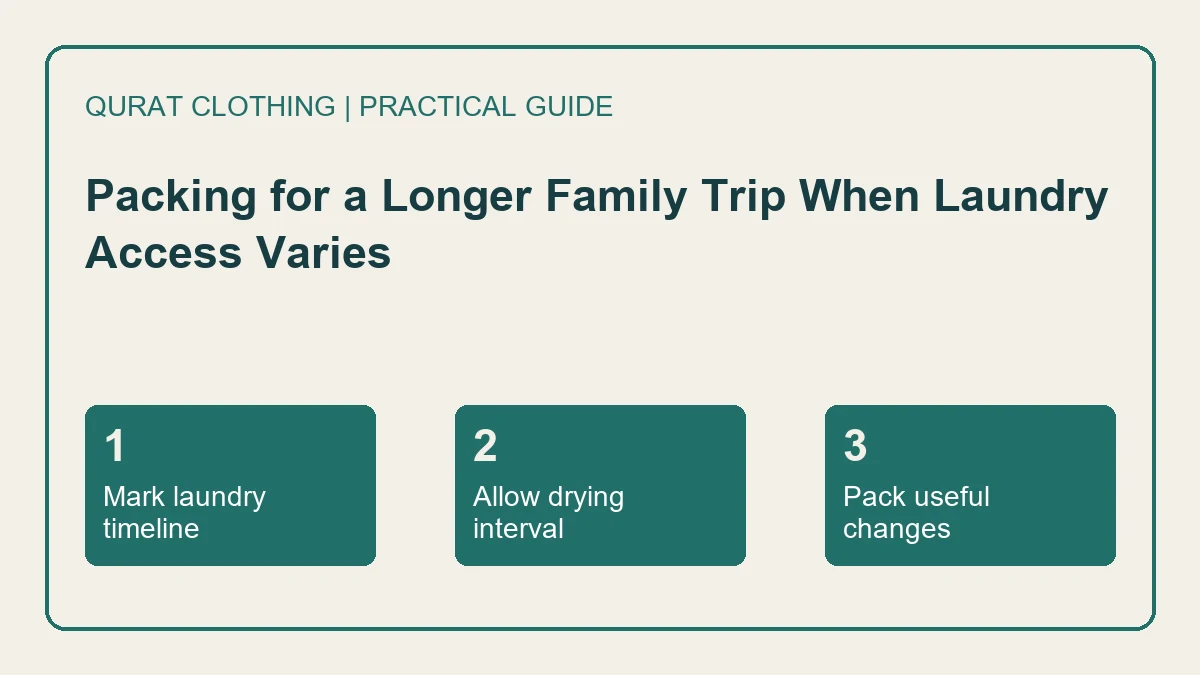
For a longer family trip, pack around the gap between usable clean changes, not simply the number of nights away. Laundry access only helps if washing, drying and collection all fit the itinerary. Build the plan from confirmed facilities and each person's clothing needs.
Draw a short laundry timeline
Mark departure, each realistic wash opportunity and when those clothes will be fully dry and available again. A washing machine on day three does not supply a clean outfit for that morning. Check access, permitted use, drying space and any collection time rather than relying on a vague promise of laundry nearby.
Use a simple hypothetical example: a family leaves on day one, washes on the evening of day three and expects the permitted drying process to finish on day four. They need wearable changes through that interval, plus a sensible allowance for their own spill or delay pattern. This is a planning example, not a universal packing quantity.
Count by person and use
Separate adults' and children's needs instead of applying one multiplier to everyone. A child who routinely needs a spare change has a different requirement from an adult rewearing a suitable outer layer. Personal essentials, active days and event clothing may have different replacement schedules.
Avoid packing a piece merely because it matches one outfit if it cannot be used elsewhere. Choose compatible tops, bottoms and layers you already own. Our five basics guide helps assess combinations without requiring a new wardrobe.
Match care to the actual facilities
Read labels before selecting trip clothes. A garment needing professional care does not become machine washable because the accommodation has a washer. A thick item that dries slowly in your available setup may also be inconvenient even if washing is permitted.
Do not make destination temperature or rain claims from a general seasonal label. Check a current forecast and the actual activities close to departure. This guide concerns the laundry plan; weather-dependent clothing remains a separate decision.
Keep a small accessible interval kit
Pack the first necessary change where it can be reached without unpacking every bag. For a child, keep the spare top and bottom together and check both still fit. Our caregiver spare-kit guide provides a useful handover checklist.
If a journey is delayed, decide which clean pieces cover the extra interval before expanding every person's suitcase. An additional useful change can be more manageable than several unrelated garments. The right allowance depends on your family's routine and facilities, not a fixed number promised by an article.
Separate transport from storage
Keep used damp clothing away from clean dry pieces during transport, then unpack it for appropriate cleaning or drying promptly. Do not leave a sealed wet bag as the long-term plan. Our musty-clothes guide explains why drying and storage need to be considered together.
Before moving accommodation, check that the laundry is collected and thick sections are dry. Reassess the timeline if the next stop has different facilities. A plan that worked for the first four days may not cover the rest of the journey.
Buy only for a confirmed gap
List missing pieces after testing your existing combinations. Browse boys', girls', men's and women's clothing when a specific replacement is needed. Check Qurat Clothing's live measurements, care instructions and available sizes. Packing becomes easier when the wash-and-dry timeline is clear, rather than when the shopping list is longest.
Laundry is available before clothes are usable
On a hypothetical seven-night trip, a family can wash clothes on day four, but suitable drying means they may not be ready until day five. The packing plan needs to cover the gap until usable changes are available.
| Record | What to compare or ask |
|---|---|
| Before the trip | List actual changes needed for the wearers’ routines. |
| Laundry point | Record when washing can happen. |
| Usable again | Allow for the real drying or collection arrangement. |
What this example helps you decide
Do not calculate the bag around a washing appointment alone. Keep a fallback for a delayed laundry opportunity and distinguish ordinary day changes from any clothing with a separate care requirement.
For an item enquiry, include the QC code, selected size and the specific detail you need clarified. Keep an observation separate from an assumption, and retain any relevant photographs with your order record.
Comments
Be the first to comment.