
Why Repeated Garment Measurements Can Differ
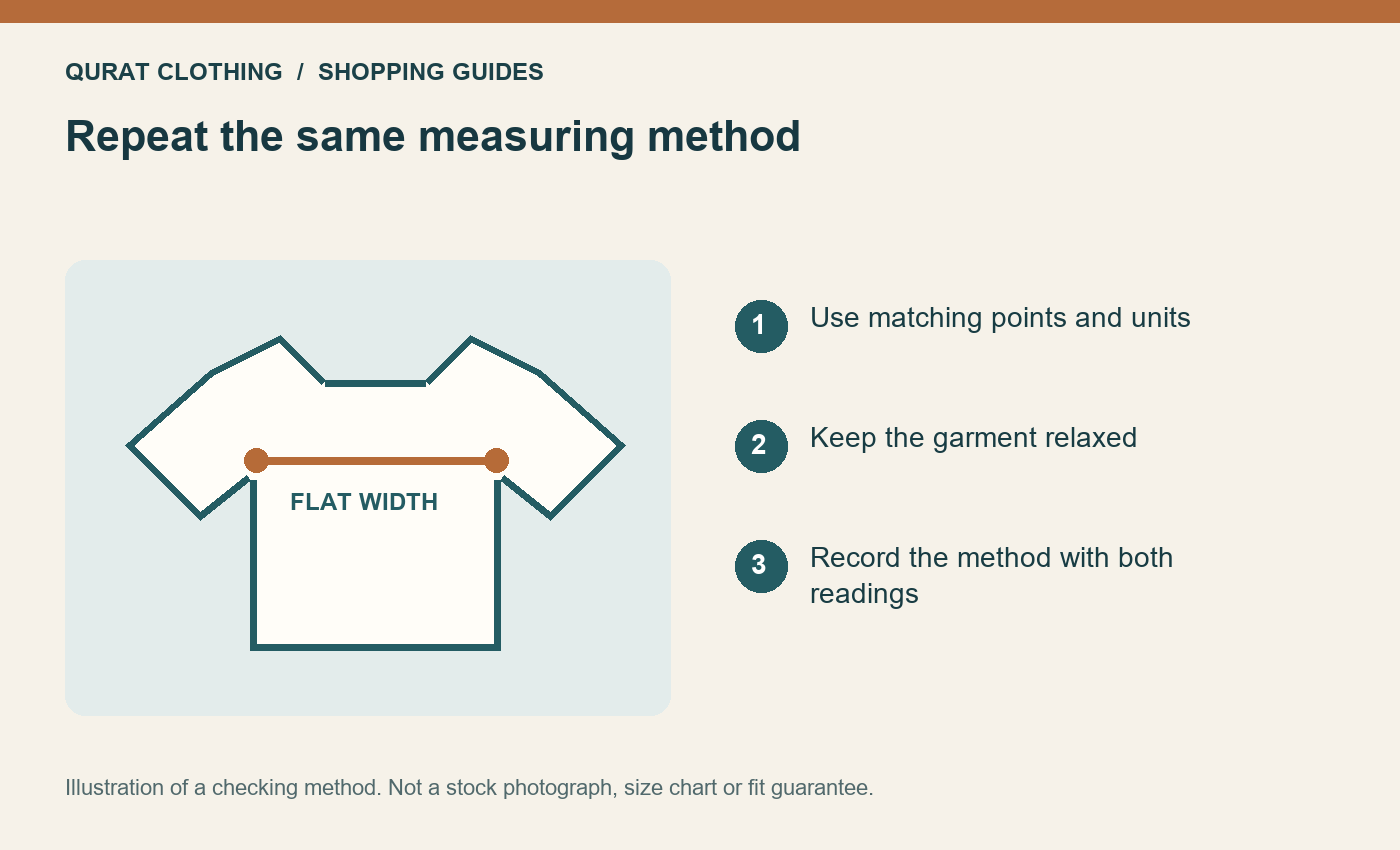
Repeated clothing measurements can differ because the tape follows a different path, starts at a different point or measures a garment in a different condition. First repeat the same method on the same relaxed garment. Do not assume every small difference proves shrinkage, a defect or an inaccurate listing.
The aim is a comparison another person can reproduce. A number with more decimal places is not automatically more useful than a clearly photographed reading taken at agreed points.
Keep the measuring conditions consistent
Use the same flat surface, unit and tape points. Smooth folds without stretching the fabric. Check that the tape starts at the intended mark rather than at a damaged or unmarked end. Arrange the garment in the same way each time and avoid switching between a straight line and a line following a curve.
For an elastic waist, state whether the reading is relaxed or taken under a specific agreed condition. Do not pull harder on the second attempt merely to obtain a larger number. Ask the seller for the method used on the actual item.
A repeat-measurement record
| Field | Entry to keep |
|---|---|
| Garment | Product code or a clear description of the reference item. |
| Condition | Relaxed, fastened or another explicitly agreed arrangement. |
| Dimension | For example, flat chest width at the stated points. |
| Units | Inches or centimetres, consistently recorded. |
| Readings | First reading, repeat reading and any observed method difference. |
| Evidence | A photograph showing tape position and endpoints. |
Example: two different chest-width readings
Imagine that the first reading is taken diagonally while the second is taken horizontally at the agreed points. Correct the method and repeat it before deciding that the garment changed. Likewise, a sleeve measured from the neckline is not directly comparable with one measured from a shoulder seam.
Do not average measurements that describe different paths and present the result as a new accurate dimension. Keep the observations, agree on the intended method and use the matching reading for the comparison.
Does a difference mean the garment shrank?
Not by itself. To assess an apparent before-and-after change, use the same garment and method with a useful earlier record. Different tape placement, garment arrangement or reference points can make the comparison uncertain. Our before-and-after washing measurement guide covers that separate task.
A seller's tolerance should be specific to its measurement process or item. This article does not invent an acceptable difference for every garment. Ask what the actual listing measurement means and how any reported difference will be reviewed.
What to send in a measurement enquiry
- The order or QC product code and the selected size.
- The dimension being compared, with units.
- The listing's stated method, if available.
- Your relaxed repeat readings and photographs.
- A note of whether the garment has been worn, washed or altered.
Keep your question factual: “These readings were taken at the points shown; can you confirm the same points for this item?” Avoid changing the garment to make the readings match. For a new delivery concern, check the current exchange and return terms before washing or altering it.
Use the size and fitting guide and current girls' clothing or the relevant department to build a measurement-led shortlist. Confirmation of dimensions does not reserve stock or guarantee personal fit.
Comments
Be the first to comment.