
A Snag in Knitwear: Understand the Thread Before Pulling
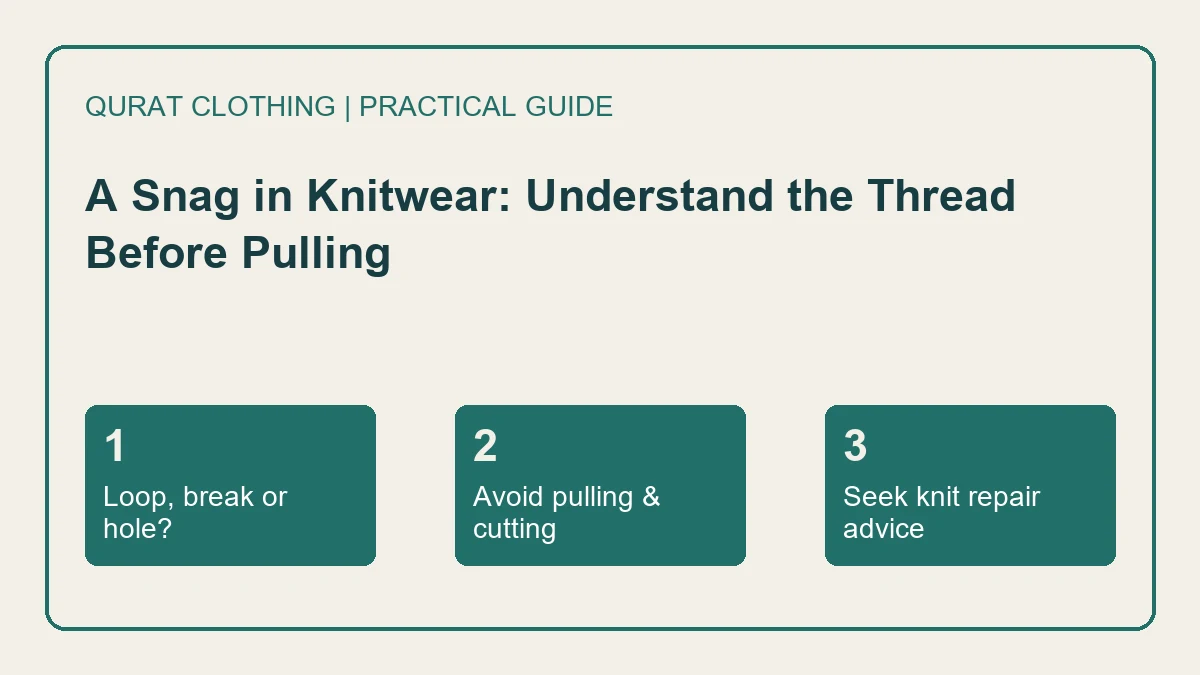
When a loop catches on knitwear, stop pulling it and inspect the surrounding fabric. A snag can involve an intact loop drawn out of position, a broken yarn or a developing hole. Those are different conditions, so cutting the visible loop is not a reliable first response.
Describe what you can see
Lay the garment relaxed in good light. Look at the loop, nearby stitches and reverse side if accessible. Record whether there is a clear break, a hole or a line of distorted stitches. Take an overall photograph and a close view before attempting any intervention.
Avoid stretching the garment to make the snag appear larger. Do not pull from the reverse just because the thread is visible there too. Without knowing the stitch structure, a tug can move the distortion or increase damage.
Separate a snag from surface fuzz
A pulled loop is different from loose lint resting on the surface. It is also different from pilling, where fibres form small balls. Our pilling, lint and fuzz guide explains those distinctions. A tool intended to remove surface pills is not an automatic solution for a connected loop.
Do not cut a loop merely to make the surface look even. If that yarn is part of the fabric structure, cutting it can create a break. Likewise, glue is not a general knitwear repair method and can change feel, appearance and later repair options.
Keep recent-purchase evidence intact
If the snag was present on arrival, retain the product code and original photographs, then contact Qurat Clothing before washing or repair. Record what you actually observed. A close photograph cannot establish exactly when or where the yarn caught.
The return policy explains eligibility and exclusions. Avoid promising that every snag qualifies, or altering the garment before the retailer has considered the concern.
Decide whether specialist repair is worthwhile
For a garment already in use, a person experienced in knit repair can assess whether an intact loop can be redistributed or whether broken yarn needs a different repair. Ask about the likely visible result, cost and time. A very fine knit, a loose decorative stitch and a dense jersey may need different handling.
Do not assume a household sewing needle and ordinary thread will recreate the original fabric. If the repair matters to the garment's usefulness, obtain an assessment before making the damage harder to inspect. A repair may remain visible even when the garment becomes usable again.
Reduce avoidable catching in the next routine
Check obvious snagging surfaces around storage and ordinary wear, such as rough bag hardware or an open hook near the garment. Follow the care label and check compatible laundry handling rather than assuming every knit belongs in the same wash.
When shopping again, inspect the surface and inside photographs alongside composition and actual fit. Current women's tops, men's tops, girls' tops and boys' tops vary in construction. A soft or loosely textured appearance is a design observation, not a guarantee about snag resistance.
A loop catches on a knitted sleeve
A sleeve catches on an edge and leaves one raised loop. The surrounding knit is still visible, and the wearer is deciding whether to pull the loop through or cut it.
| Record | What to compare or ask |
|---|---|
| Location | Show the whole sleeve area and a close-up. |
| Surrounding fabric | Record whether there is a hole or another visible change. |
| History | Say how the loop appeared and what has been tried. |
What this example helps you decide
Keep the loop and surrounding fabric intact while choosing a garment-appropriate next step. An isolated snag and a larger opening in the knit are different situations; a photograph cannot guarantee repair feasibility.
For an item enquiry, include the QC code, selected size and the specific detail you need clarified. Keep an observation separate from an assumption, and retain any relevant photographs with your order record.
Comments
Be the first to comment.