Why a Top Can Pull at the Shoulder When Chest Width Matches
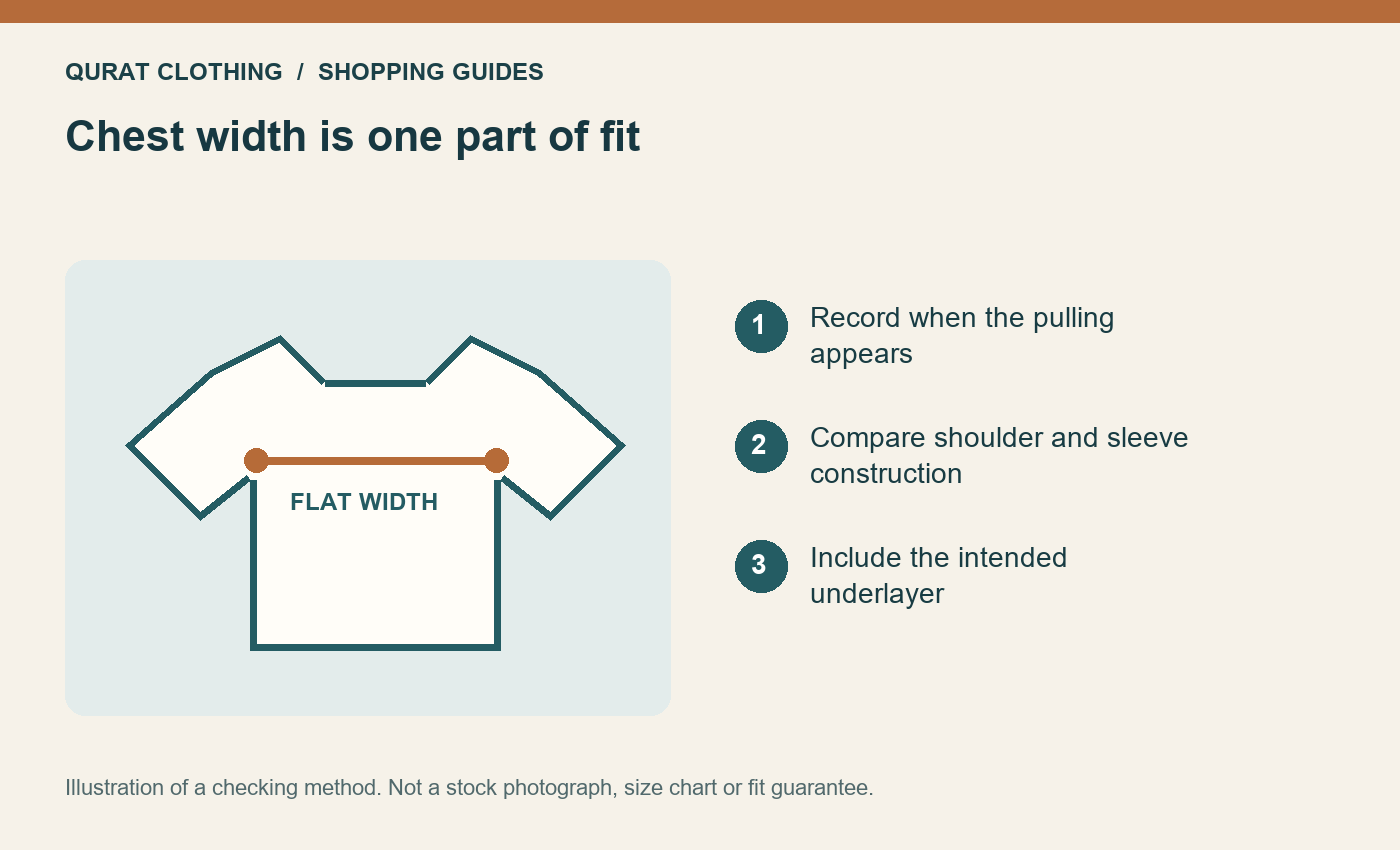
A top can match your reference garment at the chest and still pull around the shoulder or sleeve. Chest width is one measurement, not a description of the whole cut. Compare sleeve construction, shoulder position, armhole shape and the intended layers before choosing a replacement.
A photograph cannot reliably identify every cause of a pulling line. Treat this as a way to gather useful observations, not a diagnosis of the wearer or a guarantee that an alteration will solve the problem.
Describe what happens before naming the cause
Record whether the pulling appears while standing, reaching forward, raising an arm or wearing another layer. Note whether it affects one side or both. Check for a folded underlayer, twisted sleeve or fastening that is changing the way the top sits before comparing numbers.
If the garment has just arrived, photograph the concern before washing, cutting or altering it. Read the current exchange and return terms and ask about the item rather than assuming an altered garment remains eligible.
Compare more than chest width
| Observation | Useful comparison |
|---|---|
| Chest width matches but reaching feels different. | Compare sleeve attachment, upper-sleeve room and armhole shape. |
| Shoulder seams sit differently. | Photograph the seam position and compare the intended garment shape. |
| The issue appears only with an underlayer. | Compare the complete outfit instead of the top alone. |
| A raglan or dolman top is being compared with a set-in sleeve. | Ask which sleeve measurement method applies to each construction. |
Use a reference top with a similar purpose
A loose knit top and a fitted woven shirt can have different intended shapes. If possible, choose a comfortable reference that you wear in the same way as the proposed purchase. Record whether it is worn over another layer and whether it is normally tucked in or left out.
Take chest, length and relevant sleeve measurements while the reference is relaxed. Do not pull one garment wider to make its numbers match another. For sleeve comparisons, use the sleeve-construction guide; a shoulder seam is not available in the same position on every design.
A worked enquiry example
Suppose a favourite set-in-sleeve top feels comfortable, while another top with a similar chest width pulls when you reach forward. Send photographs showing the two sleeve attachments and explain when the difference occurs. Ask for the proposed item's upper-sleeve and relevant shoulder measurements if they are not already provided.
That evidence supports a more specific conversation than “the size is wrong.” It still does not establish that the new item will feel the same, or that ordering one label size larger will change only the area of concern.
When should I stop comparing and ask for help?
Ask the seller when the measurement points are unclear or the listing lacks a useful view. If you are considering an alteration, show the actual garment to a suitable repair or tailoring professional before committing to the purchase or changing it. Do not cut a seam, force a fastening or stretch the fabric to test a theory.
Explore current women's tops or the relevant department for the intended wearer. Keep the product code, selected label, reference measurements and movement observation together. Our size guide helps structure the enquiry without reducing fit to a single label.
Comments
Be the first to comment.