
How to Inspect Waistband Elastic Without Overstretching It
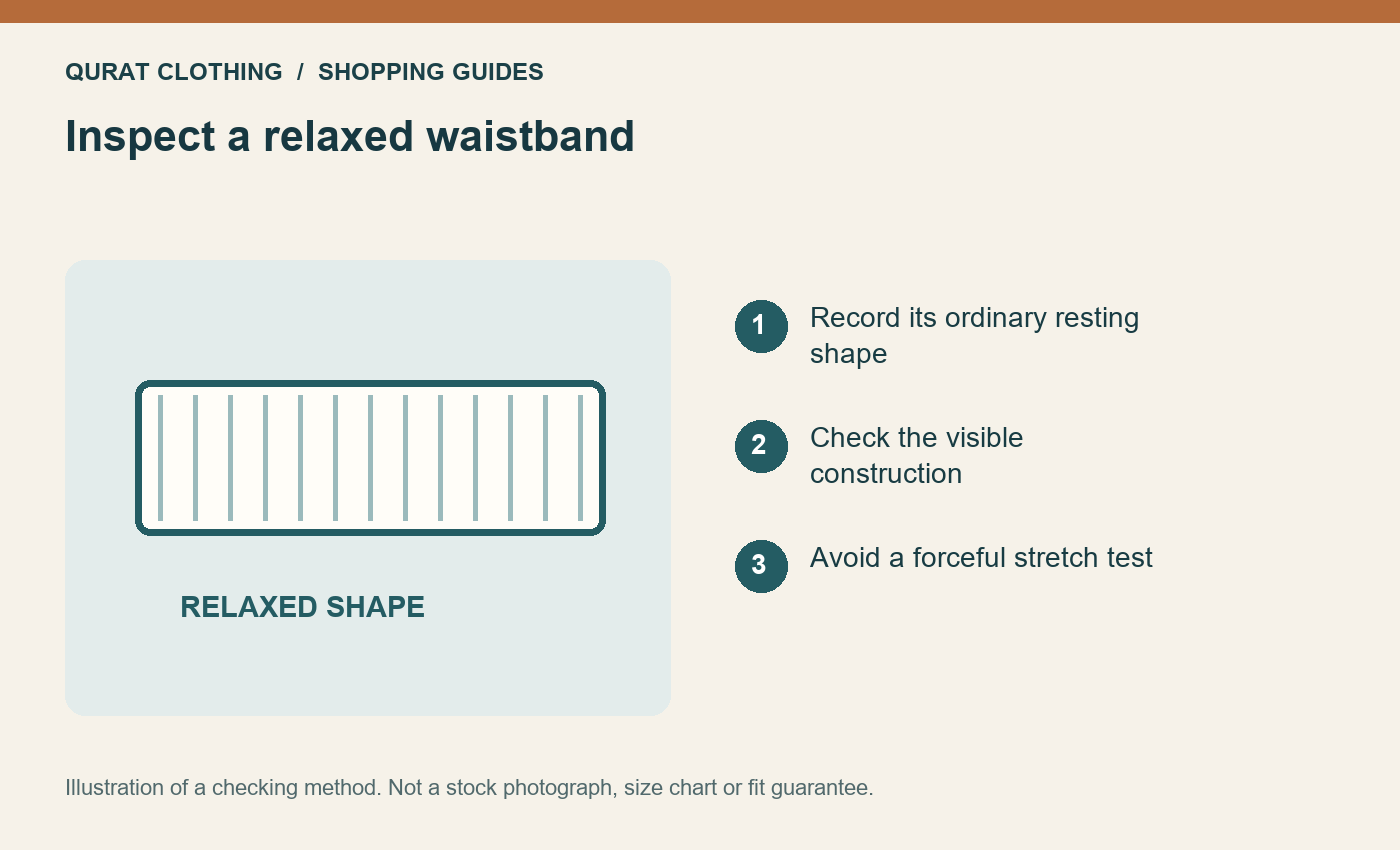
Inspect an elasticated waistband in its ordinary relaxed condition first. Look at the visible shape, attachment and surrounding fabric, then ask about the actual item's construction and measurements. A forceful stretch test is not a useful substitute for an agreed measuring method and can change the garment you are trying to assess.
A gathered waistband can be intentional. A changed waistband shape, a twisted section and a loose seam are different observations; describe what you can actually see rather than assigning every issue to worn-out elastic.
Begin with the relaxed garment
Lay the garment flat, arranging it without pulling the waistband wider. Check how it rests and whether the gathering appears consistent with its construction. Photograph the front, back and any specific area of concern. Keep the product code and size label with the record.
If the waistband includes a drawstring, button or other fastening, note that feature separately. It may affect how the garment is adjusted, but its presence does not establish an unlimited size range. The waistband comparison guide explains the different construction questions.
A waistband observation checklist
| Area | Observation to keep |
|---|---|
| Resting shape | The relaxed waist width using the seller's stated method. |
| Attachment | Visible stitching and the location of any loose or changed section. |
| Construction | Covered elastic, exposed elastic, drawstring or another arrangement. |
| Condition history | Whether the garment is newly received or has been worn or washed. |
| Open question | The exact fit or condition detail you need confirmed. |
What about a stretched-waist measurement?
Ask the seller which measurements it provides and how they were taken. A relaxed width and a width measured under tension describe different conditions. Do not assume that a photographed maximum-looking stretch is a comfortable wearing measurement or a recommended fit.
This guide sets no universal force, extension percentage or acceptable recovery limit for every waistband. Material and construction vary. Avoid pulling repeatedly until the garment reaches a number you want it to match.
A practical comparison example
Suppose a reference trouser fits comfortably, but a new pair with a similar relaxed waist width feels different. Compare the actual waistband construction, rise and leg dimensions as well. A flat waist number cannot describe all aspects of the garment or the tension felt in use.
If a section appears twisted or detached, photograph its location and ask for review. Do not cut the casing open to investigate a newly delivered concern before contacting the retailer. Use the shape-change guide for a broader record of changes after use.
Before ordering or requesting help
- Use the same relaxed measurement points as the listing.
- Describe the actual fastening and construction.
- Compare rise, length and leg shape as well as waist.
- Ask for missing item details with the QC code.
- Check the current exchange and return conditions before alteration or repeated testing.
Browse current men's bottoms or the appropriate department. The general size guide helps organise a reference-garment comparison without treating elastic as a promise that one size fits everyone.
Comments
Be the first to comment.