
How to Measure a T-Shirt or Sweatshirt Before Ordering Online
Record chest width, length and sleeves using a comfortable top as your reference.
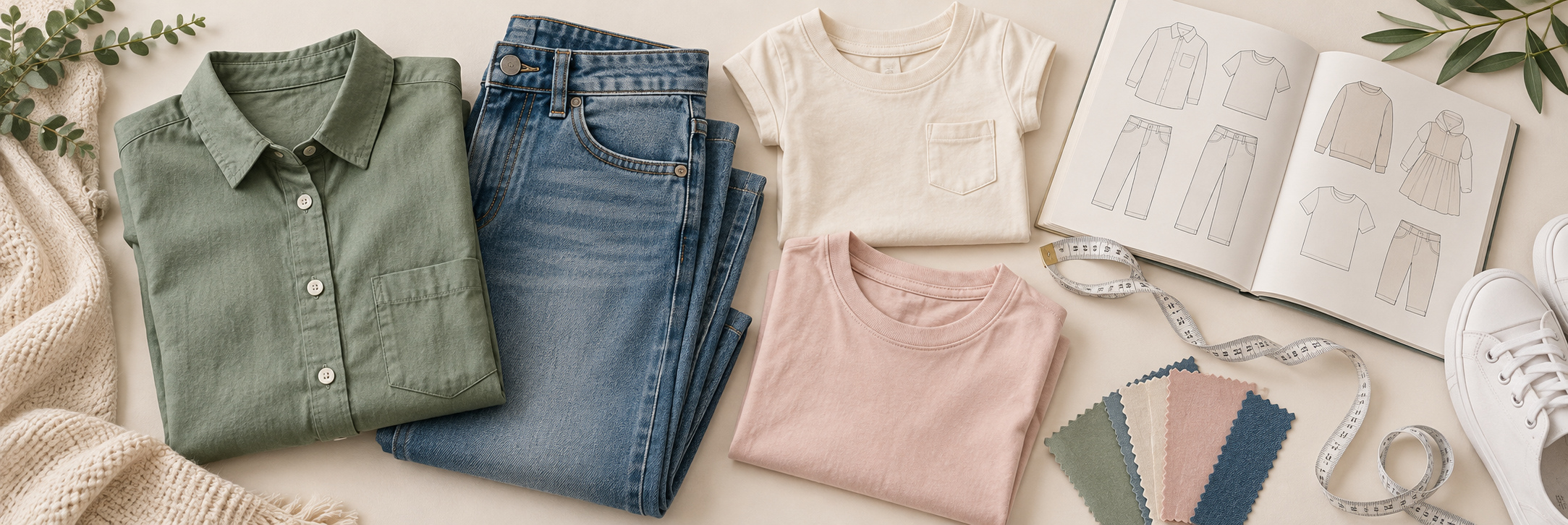
A top you already enjoy wearing is a useful reference for your next online order. Measure a similar style: a fitted T-shirt and a roomy sweatshirt are not interchangeable templates. Write down both the numbers and the way you took them.
Prepare the reference top
Lay the garment flat on a firm surface and smooth it without stretching. Keep front and back aligned as naturally as possible. Use the same unit throughout, either centimetres or inches. If the garment has a fastening, close it before measuring.
Record the key dimensions
- Chest width: measure straight across from underarm to underarm while the top lies flat.
- Body length: measure from a clearly identified shoulder point near the neck to the hem, noting your starting point.
- Shoulder width: where there are conventional shoulder seams, measure between them.
- Sleeve length: measure from the shoulder seam to the cuff and record that method.
- Hem width: useful if the lower part feels too close or you prefer more room.
Compare the same measuring points
A flat chest width is different from a body chest circumference. Likewise, sleeve length taken from the neck cannot be compared directly with shoulder-to-cuff length. Dropped shoulders and raglan sleeves can change the appropriate method, so ask the seller if a number is unclear.
Measure comfort, not only the label
If your reference top pulls while reaching, copying its dimensions may repeat that problem. Note where you want extra room. If you intend to layer underneath, measure a garment that already works over that layer.
Keep a simple comparison note
Record the reference garment, unit, date and measuring positions. Compare the product's fabric stretch and cut as well as the dimensions. A measurement match does not guarantee an identical feel across different fabrics.
Before checkout
Ask about any missing essential dimension and review current exchange terms. For children, refresh the reference regularly as they grow.
Explore QC's everyday tops guide and the kids' hoodie sizing guide to apply the comparison.
Record the measurement method in a reusable note
A useful note includes the reference garment, date, tape points and whether the item was measured relaxed. For chest width, state that it is a flat garment width. For length, identify shoulder-to-hem or back-neck-to-hem rather than simply writing length.
Sleeve comparisons need particular care when construction changes. A raglan measurement beginning near the neckline cannot be compared directly with one starting at a set-in shoulder seam. Ask the seller to explain the route instead of subtracting an estimated allowance.
The sleeve construction guide shows how to frame that question. Keep a photograph of the tape position if it helps repeat the method. Compare current boys' tops, girls' tops and adult tops by the actual dimensions, not the apparent size of a photographed model.