
Kids’ Clothing Size Guide: Age Labels and Measurements
Choose children’s clothes by real fit, room to move and useful garment measurements.
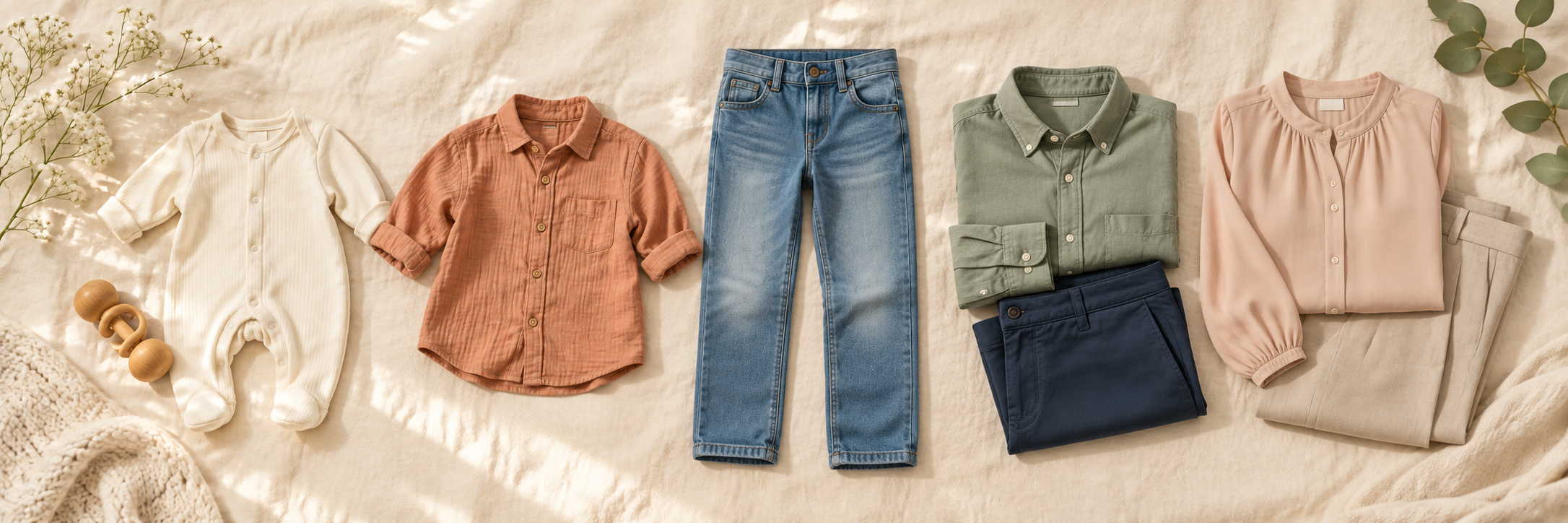
A child's age is a useful starting point for browsing, but it cannot tell you exactly how a garment will fit. Children of the same age can differ in height and build, while brands use different size systems. A few measurements from clothes your child already wears can make online shopping more straightforward.
Build a small measurement record
Choose a top and trousers that fit comfortably now. Lay each garment flat without stretching it. For tops, record the width across the chest from underarm to underarm, shoulder-to-hem length and sleeve length. For trousers, note the relaxed waistband width, inseam and overall length. Write down the unit and the date so older measurements do not become your shopping reference by accident.
Match the listing’s method
Check whether the seller gives flat widths, garment circumferences or body measurements. Do not compare a flat chest width directly with a body chest circumference. If the measuring position is unclear, ask before ordering. A loose sweatshirt and a fitted T-shirt may need different measurements even when both feel right on the same child.
Allow movement without buying an awkward fit
Ask your child to sit, reach and bend in the reference outfit. Notice any pulling at the shoulders, tightness at the waistband or restriction around the knees. Growth room should still leave cuffs, hems and waistbands manageable today. Very long sleeves and trousers that trail underfoot are not practical substitutes for the correct size.
Use preferences to narrow the choice
- Does your child prefer a soft elastic waistband?
- Will a layer fit over the T-shirt they normally wear?
- Are pockets, fastenings and cuffs easy for them to manage?
- Does the school or activity require a particular style?
A final check before checkout
Read the individual product details and current exchange information rather than assuming one brand's size will match another. Keep a short list for each child instead of ordering every sibling by age alone.
Browse Qurat Clothing's kidswear guide, then compare the available item's measurements with your record.
Use growth notes without buying an unsuitable present fit
Keep a dated record of the reference garment and the measurement points used. When a child grows, compare the current comfortable item again instead of relying on an old age label. Growth can change length and width differently.
If siblings share clothes, assess the second child's fit independently. An item that worked at a certain age for one child is not a measurement standard for another. Record waist, rise, torso length or sleeve points according to the garment rather than reducing every decision to height alone.
For a spare outfit, check top and bottom together; see the caregiver kit guide. Our before-and-after measurement article explains why tape points must stay consistent. Browse boys' and girls' clothing using the selected item's measurements. Extra room should remain compatible with present movement and fastening, rather than being a reason to accept an unusable fit.