Twill Trousers and Denim: Compare the Actual Fabric and Fit
Compare twill trousers and denim without treating the names as opposites. Check composition, finish, measurements and practical care requirements.
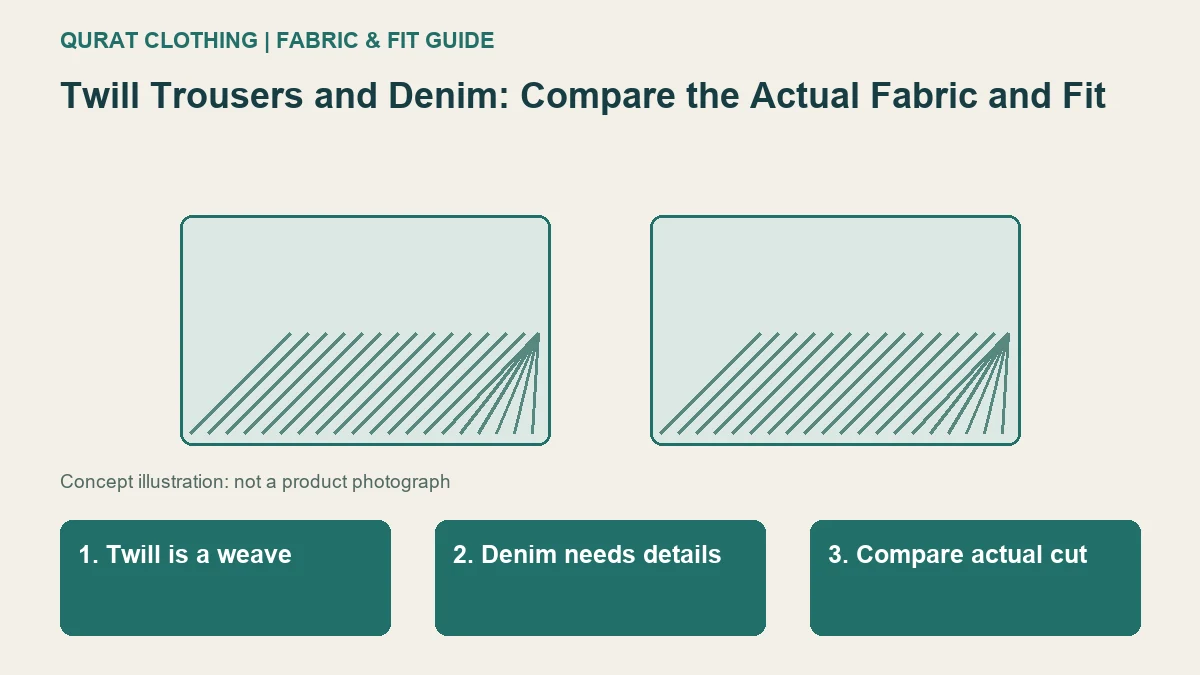
Twill and denim are not simple opposites: traditional denim commonly uses a twill construction. When comparing trousers sold under these names, look at the actual composition, surface, finish and cut. A product title alone cannot tell you which pair will be softer, lighter or more comfortable.
Separate construction from the garment name
Twill describes a weave with a diagonal effect. Denim is a particular fabric family, with conventional examples using twill; CottonWorks' denim basics describes that relationship and variations. A trouser called twill may differ from jeans in styling and finish without being outside the same broad weave category.
Do not assume that non-denim twill means pure cotton, no stretch or a smart dress code. Likewise, jeans can vary in fibre blend and construction. Read the selected item's details instead of creating a quality ranking from two labels.
Compare what touches the wearer
Ask about composition, fabric weight where actually specified, inside surface and any lining. A smooth photograph does not prove softness, and a dark wash does not establish flexibility. If stretch matters, check the label information and relaxed measurements rather than buying a smaller size expecting extension.
For example, a pair of woven trousers and a pair of jeans may have equal flat waist widths but different rises and thigh room. Their fabric names do not explain that fit difference. Use a reference pair and match tape points at waist, rise, thigh, inseam and hem.
Check practical details
Compare pocket openings, waistband fastening and intended use. A simple front may work for one occasion, while a jeans-style pocket arrangement may suit another. A specific workplace or school can have its own requirements; the word twill does not confirm compliance.
Our chino-style trouser guide covers a common styling description, and the jeans checklist focuses on denim decisions. Use them for different questions rather than expecting one fabric word to settle the entire purchase.
Compare care as part of value
Read each garment's own label. Do not assume that all twills can be washed together or that every denim item needs the same treatment. A predicted amount of shrinkage is not a reason to order an unsuitable present fit.
This is a fabric comparison, not confirmation that Qurat Clothing currently stocks twill trousers. Browse men's bottoms, women's bottoms and boys' trousers for actual options. Ask about a missing weave or composition detail when it determines your decision; a twill coat listing would not establish trouser availability.
A twill trouser and jeans share a similar colour
An adult compares two navy trousers. The colour does not answer how their leg shape, fibre blend, stretch or construction differs.
| Record | What to compare or ask |
|---|---|
| Fabric evidence | Read the item’s composition and structure details. |
| Fit evidence | Compare rise, thigh, knee, hem and length. |
| Care evidence | Check each label rather than sharing a denim routine. |
What this example helps you decide
Denim and other twills need item-specific comparison. Neither term alone determines durability, stretch or whether the cut will suit the wearer’s preferred fit.
For an item enquiry, include the QC code, selected size and the specific detail you need clarified. Keep an observation separate from an assumption, and retain any relevant photographs with your order record.