
Velour Casualwear: Pile Direction, Fit and Care
Check velour surface shading, relaxed fit and care instructions before buying. Separate the fabric effect from marks, stretch assumptions and stock claims.
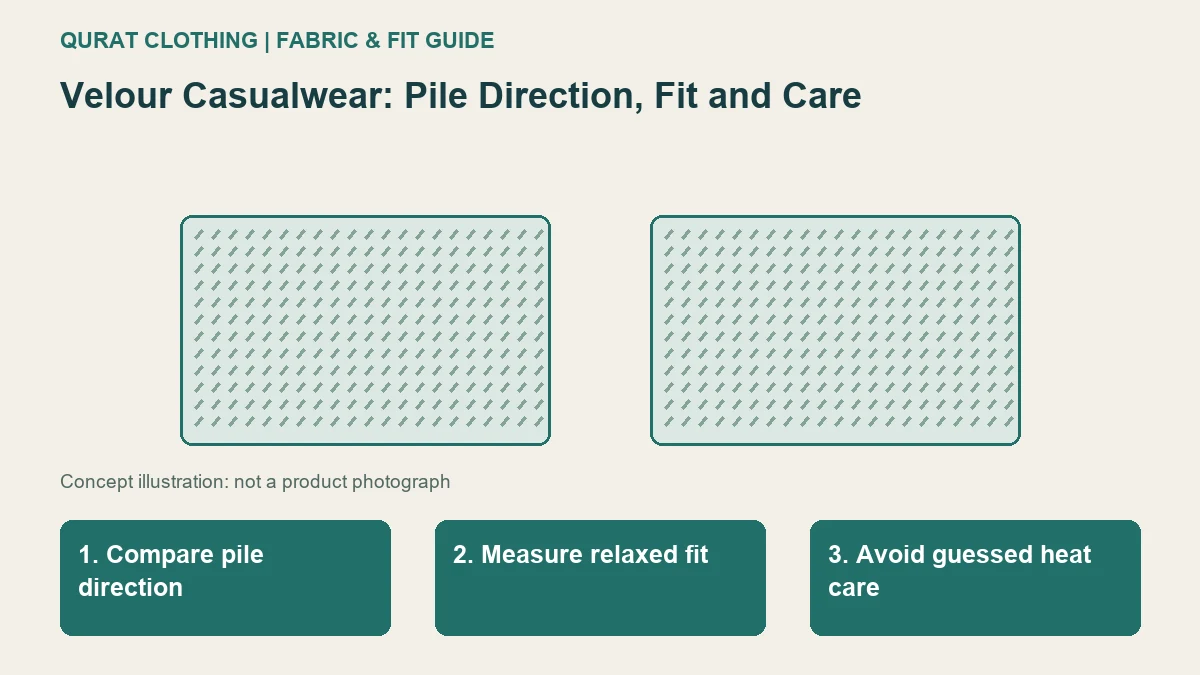
Choose velour casualwear by checking its pile surface, relaxed dimensions and care label together. A lustrous or plush photograph explains part of the appearance, but cannot establish fibre content, stretch recovery or how the whole garment feels. Keep those questions separate when comparing options.
Understand the surface before judging a shade
Apparel velour can have a short pile surface that reflects light differently with direction. CottonWorks' mechanical-finishing guide describes knitted velour made by shearing terry loops. That example explains a construction route; it does not establish how every commercially named velour garment was made.
Look at the full item and close details under comparable lighting. A darker-looking panel might involve surface direction, shadow or another condition. Do not call it a defect or dismiss it as harmless without checking the particular item.
Compare the pieces without assuming a matching shade
If buying a top and bottom separately, confirm whether they are sold as a matching set. Two items called black or navy may differ in tone and pile appearance. A model image of a combination is not proof that every photographed piece is included.
Our clothing-set guide helps check each piece independently. Even a genuine set may have a top that suits you and a bottom that does not. A coordinated surface does not replace measurements.
Check movement from relaxed dimensions
Use a similar comfortable garment as a reference. Compare waist, rise and thigh for trousers, or chest, body length and sleeves for a top. Do not pull a fabric wider and treat that maximum extension as the intended fit.
For example, if you need comfortable seated trousers, compare the rise and seat rather than choosing only by a soft-looking leg. A roomy body can still have a close waistband. Read composition where available and ask about an unclear stretch description.
Follow care without flattening assumptions
Check the complete label before heat, washing, brushing or drying. Do not press the pile directly because another fabric tolerates it, and do not prescribe one temperature for all velour. Our ironing-marks guide explains why repeated heat is not a universal repair.
Photograph an unexpected mark on delivery before attempting treatment. This general guide does not confirm velour stock at Qurat Clothing. For current alternatives, browse women's tops, women's bottoms or men's clothing, checking each actual fabric, size, condition and care instruction before purchase.
Velour colour changes when the fabric is brushed
A casual top’s surface looks lighter in one photograph and darker in another. Directional pile may affect its appearance, but a local mark still needs separate inspection.
| Record | What to compare or ask |
|---|---|
| Whole view | Compare photographs with the fabric arranged consistently. |
| Surface detail | Ask about pile direction and any persistent mark. |
| Care | Check pressing and cleaning instructions for the actual garment. |
What this example helps you decide
Separate directional appearance from a stain or damaged surface. Avoid applying heat or friction merely to force a photograph-like shade, and do not infer a luxury fibre from the velour name.
For an item enquiry, include the QC code, selected size and the specific detail you need clarified. Keep an observation separate from an assumption, and retain any relevant photographs with your order record.