
How to Measure Baby and Children’s Clothes in Inches
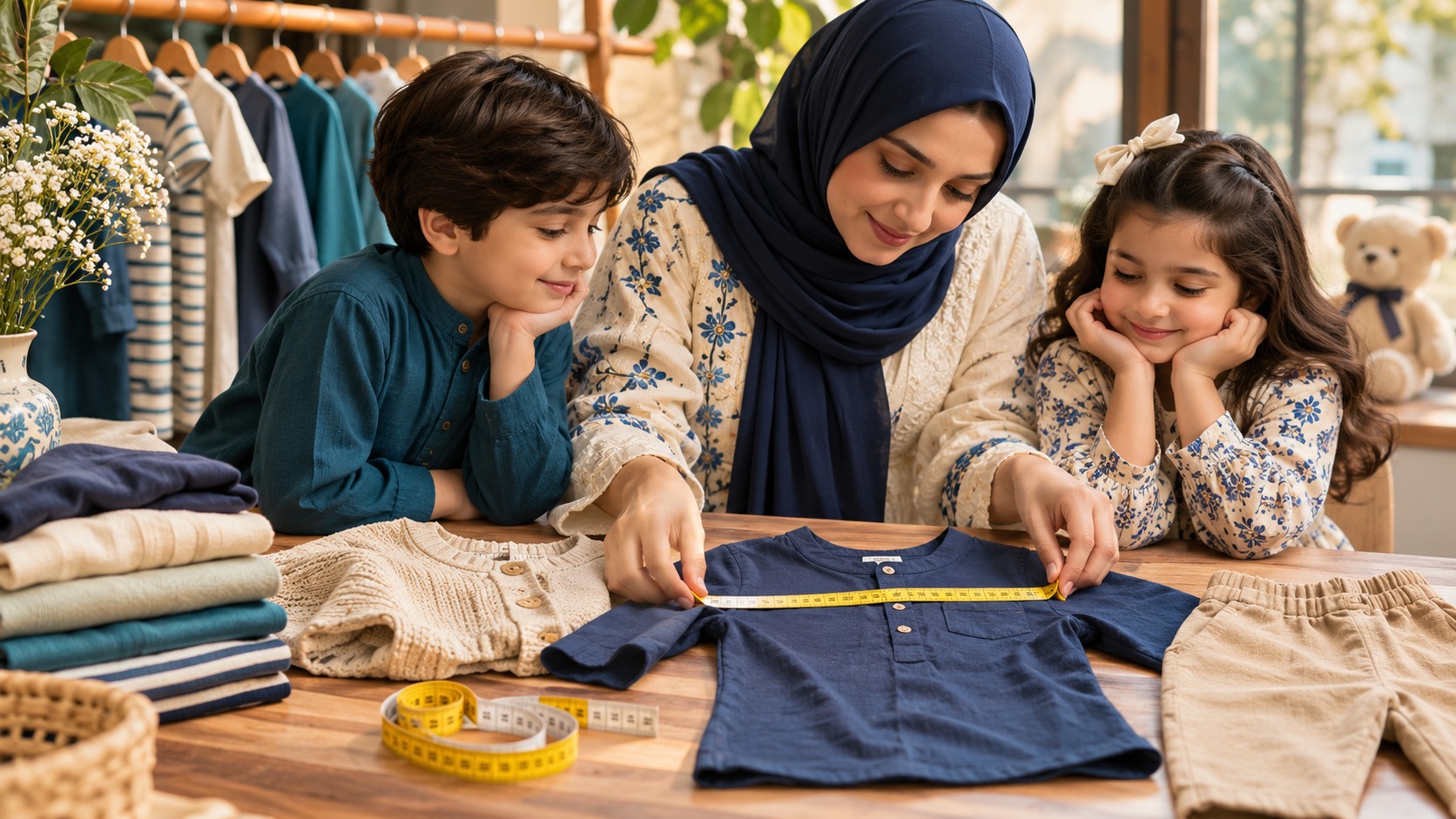
A practical clothing guide from Qurat Clothing
Choose baby and children's clothing by comparing the selected garment's actual measurements with a suitable reference. Keep body measurements, flat garment measurements and age labels separate. A general Preemie, Newborn, toddler or years label cannot guarantee the same fit across different brands and garment types.
This guide explains a repeatable method in inches. It replaces the idea of one universal age-and-weight conversion chart with an item-specific comparison. For clothing with specialist requirements, confirm those requirements with the appropriate source rather than using ordinary casualwear measurements alone.
Start with the measurement shown in the listing
Check whether the seller has supplied body dimensions or measurements taken from the garment. A chest circumference around a wearer is different from a relaxed flat chest width across a top. A child's height is different from the length of the shirt or trouser they will wear.
Read the selected product's measurement image and ask what its tape points mean. Our size and fitting guide gives the general approach. Keep the QC product code and selected size with every enquiry.
Use a comfortable reference garment
Choose a similar item that currently suits the child and intended use. Lay it flat on a clear surface, arrange it without stretching and use one unit consistently. A reference sweatshirt worn over a T-shirt may be more useful for a layered purchase than a fitted top worn alone.
For a baby garment, inspect the actual opening and fastening arrangement as well as dimensions. Do not decide suitability from the age name alone. For a set, compare both pieces; a top and bottom carrying the same label can still meet the wearer's needs differently.
| Garment area | Record | Clarify |
|---|---|---|
| Top chest | Relaxed flat width at agreed points. | Flat garment width or body circumference? |
| Top length | The stated start and finished hem points. | Front, back or another method? |
| Sleeve | The seller's stated measuring path. | From shoulder seam, neckline or another point? |
| Trouser waist | Relaxed width and actual fastening arrangement. | Relaxed or under tension? |
| Leg length | Inseam or outseam as specified. | Which seam and endpoints? |
A worked comparison in inches
Suppose a comfortable reference top measures 12 inches across the chest at the agreed points and 16 inches in overall length. These are hypothetical readings illustrating the method, not a recommended child's size. Compare the proposed item's same dimensions, then check sleeve, neckline and intended layers separately.
Do not enter the 12-inch flat width into a body-circumference chart as if it were a body measurement. Do not choose a size based only on the 16-inch length while ignoring the rest of the garment. If units differ, one inch equals 2.54 centimetres; convert the same dimension, not a different measuring method.
What should I do with age and EU labels?
Keep them as identifiers and starting references. Labels such as Newborn, 2T or 7Y do not supply all finished-garment dimensions. European height-style labels need their own interpretation, covered in our EU kids' size guide. Give priority to information for the selected garment.
If a child falls between the sizes you are considering, compare both items' actual dimensions and the intended outfit. Moving up a label can change sleeves, neck openings and length as well as width, so “always buy larger” is not a complete fit method.
Keep a reusable size record
Record the reference garment, wearer, date, units, tape points and useful photographs. Update the reference when fit needs or clothing use changes. The family measurement record provides a worksheet, and the measurement-photo guide helps make enquiries clear.
Before ordering
- Confirm the QC code and selected variant.
- Match garment measurements using the same points and units.
- Check openings, fastening and room for the intended layers.
- Ask for missing information before paying.
- Read the current exchange and return conditions.
Browse current boys' clothing and girls' clothing. Use age navigation to find possibilities, then make the final comparison using the actual garment details. Availability and measurements should be checked for the specific item rather than inferred from a general chart.
Explore Qurat Clothing
Browse Qurat Clothing for current family apparel. Compare the selected item’s photographs, available sizes, measurements and condition notes, and use its actual care information when planning wear or upkeep.
Comments
Be the first to comment.