
Everyday Clothing for Active Boys and Girls: Fit Guide
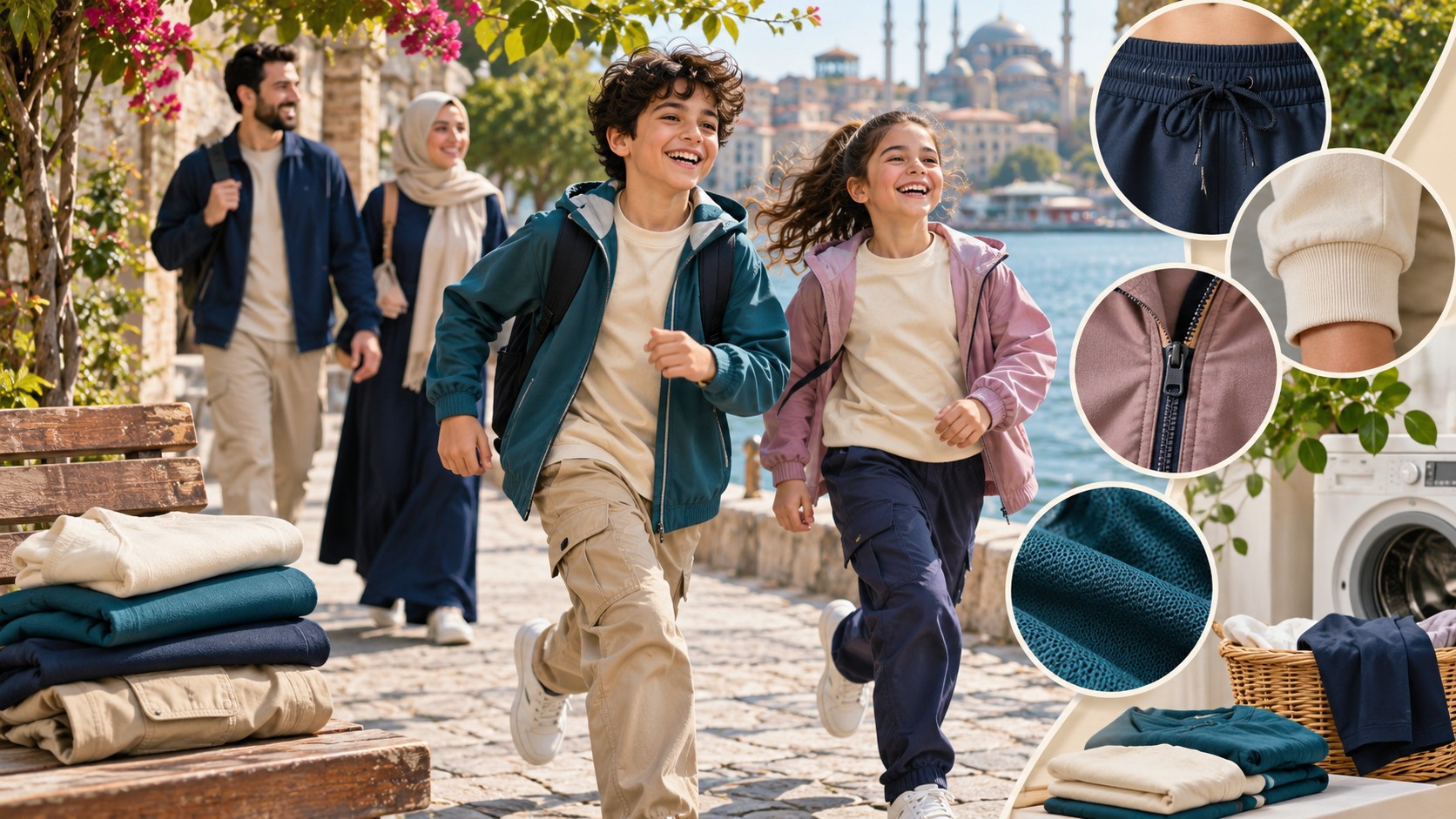
A practical clothing guide from Qurat Clothing
-
Quick answer: For active children, choose clothes that allow comfortable sitting, reaching and walking. Compare actual measurements, read fabric details and check practical features such as waistbands, sleeves and closures before ordering export leftover kidswear.
A child’s favourite outfit often becomes the one that feels easy to wear. A striking print is enjoyable, but the fit and small construction details matter during a day of play, travel and family activities. Here is a practical way to assess everyday options at Qurat Clothing.
Think about the child’s routine
Start with the activities the clothes need to suit. A quiet afternoon indoors, a family visit and an energetic outing may call for different combinations. Consider how long the outfit will be worn and whether the child will need an extra layer.
Choose according to the actual conditions and the child’s preferences. “Export quality” or a brand name does not tell you whether a particular garment will feel comfortable for that child.
Check room for movement
Compare the listed measurements with a well-fitting garment of the same type. Look beyond overall length: chest width, sleeve length, waist and trouser length can all affect how an outfit feels.
Once the clothes arrive, have the child try sitting, bending and lifting their arms. Look for pulling across the shoulders, an uncomfortable waistband or sleeves that keep covering the hands. Keep the garment in the condition required by the return and exchange policy while checking fit.
Do not choose a much larger size simply to allow for growth. Excess fabric can make everyday movement inconvenient. Our children’s size guide offers useful context, but the individual product measurements remain the main reference.
Read fabric and stretch details
Check the fibre composition, fabric type and any stated stretch information. A soft appearance in a photograph cannot confirm how a fabric feels against the skin or how much it stretches.
Think about fabrics the child already enjoys wearing. If a listing leaves an important point unclear, ask our team before ordering. Our fabric label guide can help you interpret common terms.
Look closely at everyday details
Check whether trousers have an elastic, adjustable or fixed waistband. Look at buttons, zips, cuffs and neck openings, and consider what the child can comfortably manage when dressing.
A favourite pair of trousers can be a useful reference for the style of waistband and cut to look for. Photographs and written details should help you understand these features; request clarification when they do not.
Choose layers that work together
A top and a removable outer layer can offer more flexibility than relying on one heavy garment. Check that the outer layer has enough room over the clothes normally worn underneath.
For cool-weather shopping, our fleece versus terry guide discusses different uses. Select the actual item according to its details and your child’s needs.
Make regular wear easy
Read the care label and choose pieces that suit your household routine. Keep a few comfortable combinations ready so dressing does not depend on one favourite item always being clean.
Export leftover stock can vary by size and design. Focus on the features that work for your child, and stay open to a different colour when the fit and practical details are suitable.
Browse boys’ clothing and girls’ clothing at Qurat Clothing, or start with Shop by Age & Size. Check every selected item’s measurements before checkout.
Cover image: AI-generated editorial illustration; clothing shown does not represent confirmed stock.
A play outfit that fits standing but pulls when seated
A child’s trousers look suitable in a standing photograph but feel restrictive when sitting. Waist size alone has missed a practical part of the fit question.
Record What to compare or ask Movement Note where the garment pulls during ordinary activity. Dimensions Compare rise, thigh and length as well as waist. Construction Check cuffs, fastenings and any decoration in the relevant area. What this example helps you decide
Ask about the specific dimension or feature that matters. Softness, stretch and durability should not be inferred from an activewear-style name or promised for every child.
For an item enquiry, include the QC code, selected size and the specific detail you need clarified. Keep an observation separate from an assumption, and retain any relevant photographs with your order record.
Continue with the relevant guide
A movement check you can repeat
Use a similar outfit the child already finds comfortable as the reference. Check seated reach, bending and raised arms. Note where a garment pulls or needs repeated adjustment: that gives a more useful enquiry than simply asking for a larger size.
- Shoulders and sleeves: check reach and manageable cuff position.
- Waist and rise: compare seated comfort and whether the waistband stays in place.
- Legs and hems: check room for bending and a length that clears the floor.
- Openings: choose fastenings the child can manage for the planned routine.
Is there one best fabric for every active child?
No single garment description establishes how it will feel for every child or activity. Read the actual fibre, construction and care information, and take the child’s preferences seriously.
Browse boys’ clothing and girls’ clothing. Use the trouser comfort guide for a specific lower-body fit issue.
Explore Qurat Clothing
Browse Qurat Clothing for current family apparel. Compare the selected item’s photographs, available sizes, measurements and condition notes, and use its actual care information when planning wear or upkeep.
Comments
Be the first to comment.