
What an Inside-Seam Photograph Tells a Clothing Shopper
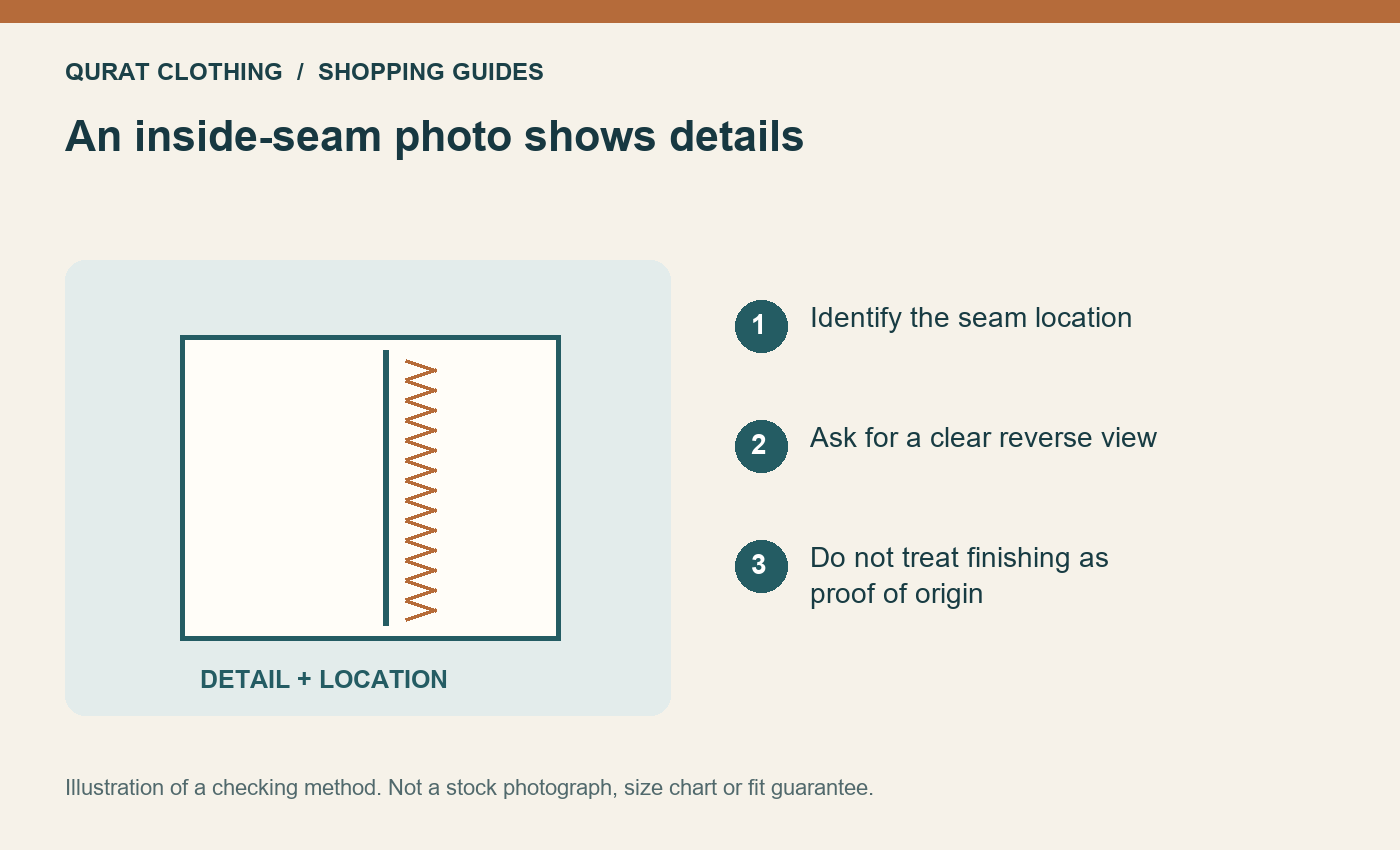
An inside-seam photograph can show the visible stitching, seam allowance and nearby fabric at a particular location. It is useful evidence of construction and an observed concern. It cannot certify a garment's origin, overall durability or brand authenticity.
Ask for a photograph that answers your actual question. A neat close-up of one seam does not show every part of the garment, and an unfamiliar finish does not by itself establish a defect.
Identify the seam before inspecting the detail
Say whether you mean a side seam, sleeve attachment, waistband, crotch seam or hem. Request a wider view showing the location as well as a close-up of the specific area. Keep the QC code with the enquiry so the photograph can be associated with the selected item.
A single close-up can hide important context. A folded edge, lining or intentional gathering may appear confusing until the surrounding construction is visible. Our seam-puckering guide considers one particular observation; not every ripple or loose-looking thread has the same explanation.
A useful two-view request
| View | What it should establish |
|---|---|
| Context view | The garment area, side and position of the seam. |
| Detail view | The stitching, fabric edges and specific point you are asking about. |
| Related view if needed | The same area from the other side without opening or damaging it. |
| Written note | The product code and the question the photographs should answer. |
Describe an observation precisely
For example, say “there is a visible gap at this point” or “this thread extends from this seam” rather than deciding from a picture that all stitching is weak. Ask whether the detail is part of the construction or a disclosed condition issue and whether the seller can provide a clearer view.
If you are considering a repair, ask a suitable professional to assess the actual garment before assuming the work is simple or worthwhile. A photograph can support an enquiry without establishing repair feasibility.
Example: a thread at the inside hem
Suppose you see a thread end near the inner hem. Keep it intact and photograph the full area and the point where it emerges. The images may help distinguish an ordinary end, decorative or temporary stitching and a concern requiring closer review. They do not justify pulling or cutting before the construction is understood.
The temporary-stitching guide explains that separate decision. Follow the current purchase and return terms if the concern relates to a new delivery, and contact the retailer before changing its condition.
Keep construction evidence separate from provenance
A tidy seam is useful to observe, but it does not document where the garment was made, why it became surplus or whether a brand has authorised the retailer. Ask for evidence specific to a claim that matters to your purchase. Our garment-claim guide explains those limits.
Browse current button-front shirts or the relevant category with actual fit, composition, condition and construction questions together. A buying decision is better supported by several relevant observations than by treating one finishing detail as a universal quality certificate.
Comments
Be the first to comment.